Launching a fitness apparel line today means competing with established brands that have spent years refining their sourcing. The fastest way to close that gap is working with a private label activewear manufacturer who already has the fabric libraries, pattern blocks, and production capacity in place. This guide walks through how private label activewear manufacturing works, what separates a reliable partner from a risky one, and the questions to ask before committing to a production run.
What Is Private Label Activewear Manufacturing?
Private label manufacturing means a private label activewear manufacturer produces activewear using existing pattern blocks and fabric options, then applies your brand’s labels, hang tags, and packaging. Unlike a fully custom cut-and-sew program, private label programs typically move faster and carry lower minimum order quantities, making them a practical entry point for new fitness brands and a useful complement for established ones testing new categories.
Private Label vs. Custom Cut-and-Sew: What’s the Difference?
The two approaches sit on a spectrum. Private label relies on a manufacturer’s existing patterns and fit blocks, with branding and minor style tweaks layered on top. Custom cut-and-sew starts from your own technical specs and pattern development, giving full control over fit and construction but requiring longer lead times, higher MOQs, and more design input from your side. Many brands start with private label to validate demand, then move specific styles into custom development once sales justify it.
Choosing the Right Fabric for Gym Wear and Activewear
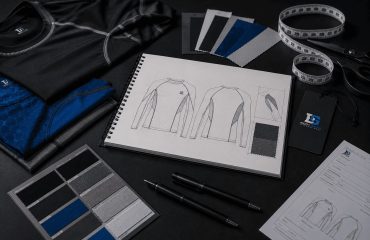
Fabric choice affects how a garment performs and how it’s priced. Common activewear fabrics include polyester-spandex blends for compression leggings, nylon-spandex for four-way stretch shorts, and moisture-wicking poly blends for training tops. Ask your manufacturer for fabric swatches with GSM (grams per square meter) listed, since GSM affects both feel and cost. Lighter fabrics around 180-220 GSM suit running and hot-weather training, while heavier fabrics around 240-280 GSM hold compression and shape better for leggings and squat-proof bottoms.
Key Technical Features Worth Specifying
Beyond fabric, a handful of construction details separate mid-tier activewear from premium product: flatlock or four-needle six-thread seams to reduce chafing, gusseted crotch panels for mobility, moisture-wicking and anti-odor finishes, and squat-proof opacity testing for leggings. Specify these details upfront in your tech pack or product brief so pricing quotes reflect the actual build you want.
MOQs, Pricing, and Lead Times
Private label MOQs commonly range from 50-100 pieces per style and colorway with an established private label activewear manufacturer compared to 300 or more pieces for fully custom cut-and-sew programs. Pricing depends on fabric, print or embellishment method, and order volume, and typically drops meaningfully once orders cross 300-500 units. Lead times for private label runs generally fall between 3-5 weeks for existing patterns, versus 6-10 weeks for custom development that includes pattern grading and fit sampling.
The Private Label Ordering Process, Step by Step
- Share your brief covering target price point, sizes, and rough design direction.
- Review fabric swatches and existing pattern options, then select a base style.
- Approve a pre-production sample, checking fit, stitching, and fabric hand-feel.
- Confirm branding placement, whether woven labels, heat transfers, or printed tags.
- Approve bulk production after sign-off on the final sample.
- Receive quality-control reports and shipping documentation ahead of delivery.
Quality Control and Sample Approval
Never skip the pre-production sample stage. A sample lets you check seam strength, colorfastness, and how the fabric behaves after a wash cycle, issues that are far cheaper to fix before a 500-unit run than after. Ask whether your private label activewear manufacturer performs in-line inspections during cutting and sewing, plus a final random inspection before packing, and request photos or a video call during production for larger orders.
Common Mistakes Fitness Brands Make When Sourcing
Even experienced brands run into avoidable problems when they don’t vet a private label activewear manufacturer carefully:
- Skipping wash-test samples, then discovering shrinkage or color bleed after delivery.
- Choosing the cheapest quote without confirming fabric GSM or seam type.
- Underestimating lead times around peak seasons, leaving no buffer before launch.
- Not clarifying labeling and packaging requirements until after production starts.
Sustainability Considerations in Activewear Sourcing
More fitness brands are asking about recycled polyester, OEKO-TEX certified fabrics, and reduced water-use dyeing processes. If sustainability is part of your brand story, ask manufacturers directly which certifications they hold and request documentation rather than relying on marketing claims alone.
Why Choose Body Gear International as Your Private Label Activewear Manufacturer
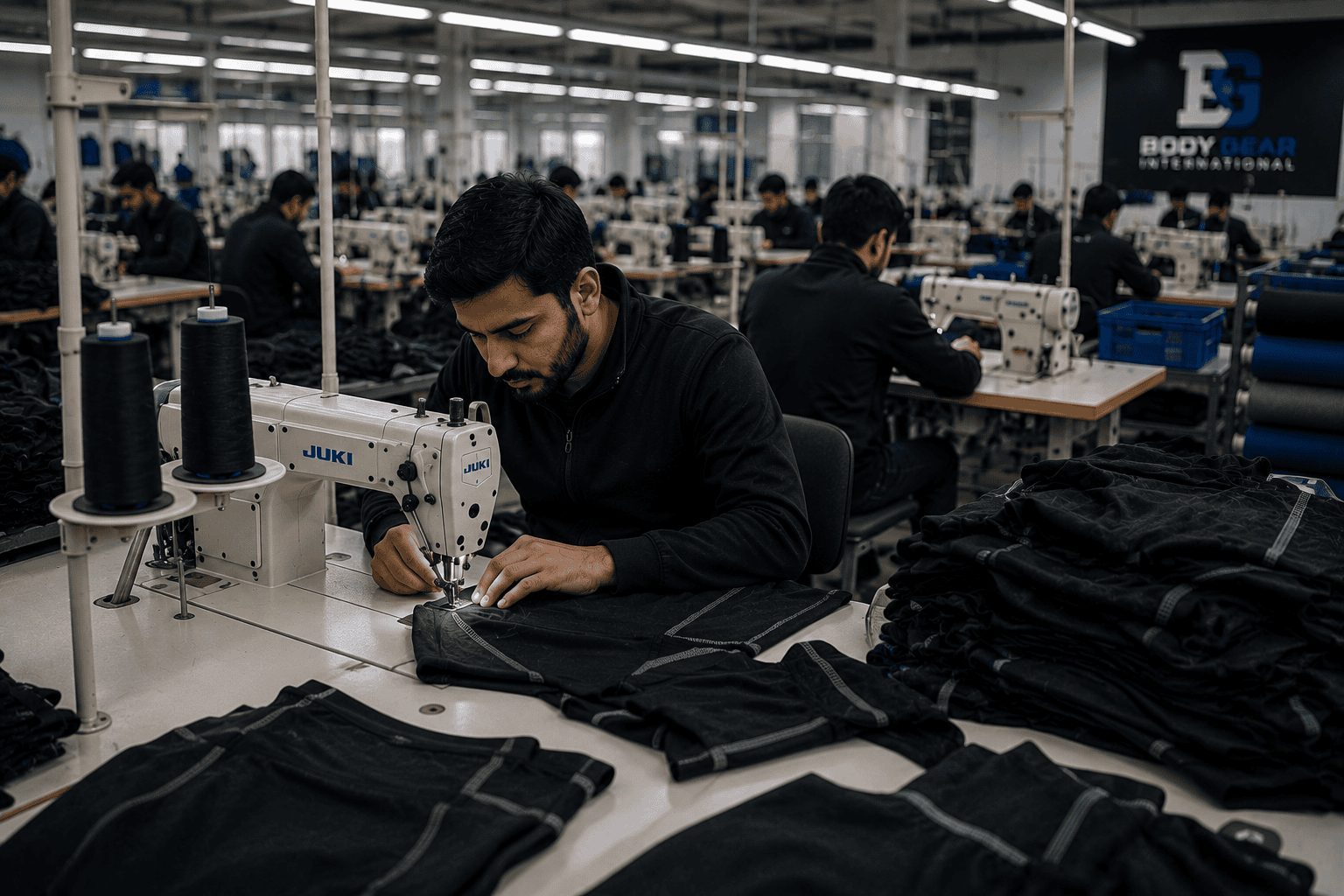
Body Gear International manufactures activewear and teamwear from Sialkot, Pakistan, working with fitness and sports brands on both private label and fully custom programs. Our in-house pattern library, fabric sourcing network, and quality-control process are built to support smaller private label orders as well as larger custom production runs as a brand scales.
Frequently Asked Questions
What’s a typical MOQ for a first private label order? Many first-time brands start around 50-100 units per style and colorway, though this varies by manufacturer and fabric.
How long does a private label sample take? Pre-production samples typically take 7-14 days depending on fabric availability and complexity.
Can I switch from private label to fully custom later? Yes, many brands begin with private label styles to validate demand, then move successful styles into custom pattern development.
Final Thoughts
Private label manufacturing gives fitness brands a practical way to launch or expand an activewear line without the lead times and investment a fully custom program requires. The brands that get the best results ask detailed fabric and construction questions upfront, insist on a pre-production sample, and build in a realistic timeline. If you’re evaluating private label activewear manufacturers for your next activewear collection, we’re happy to walk through fabric options and MOQs for your specific styles.