Guides on sourcing custom sportswear, activewear and fitness apparel manufacturing.
Private Label Activewear Manufacturing: The Best Guide for Fitness Brands (2026)
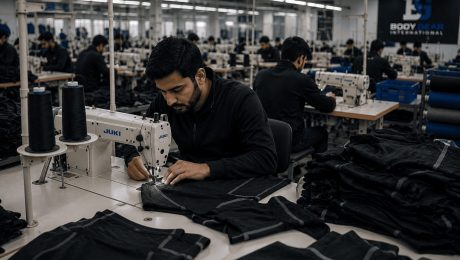
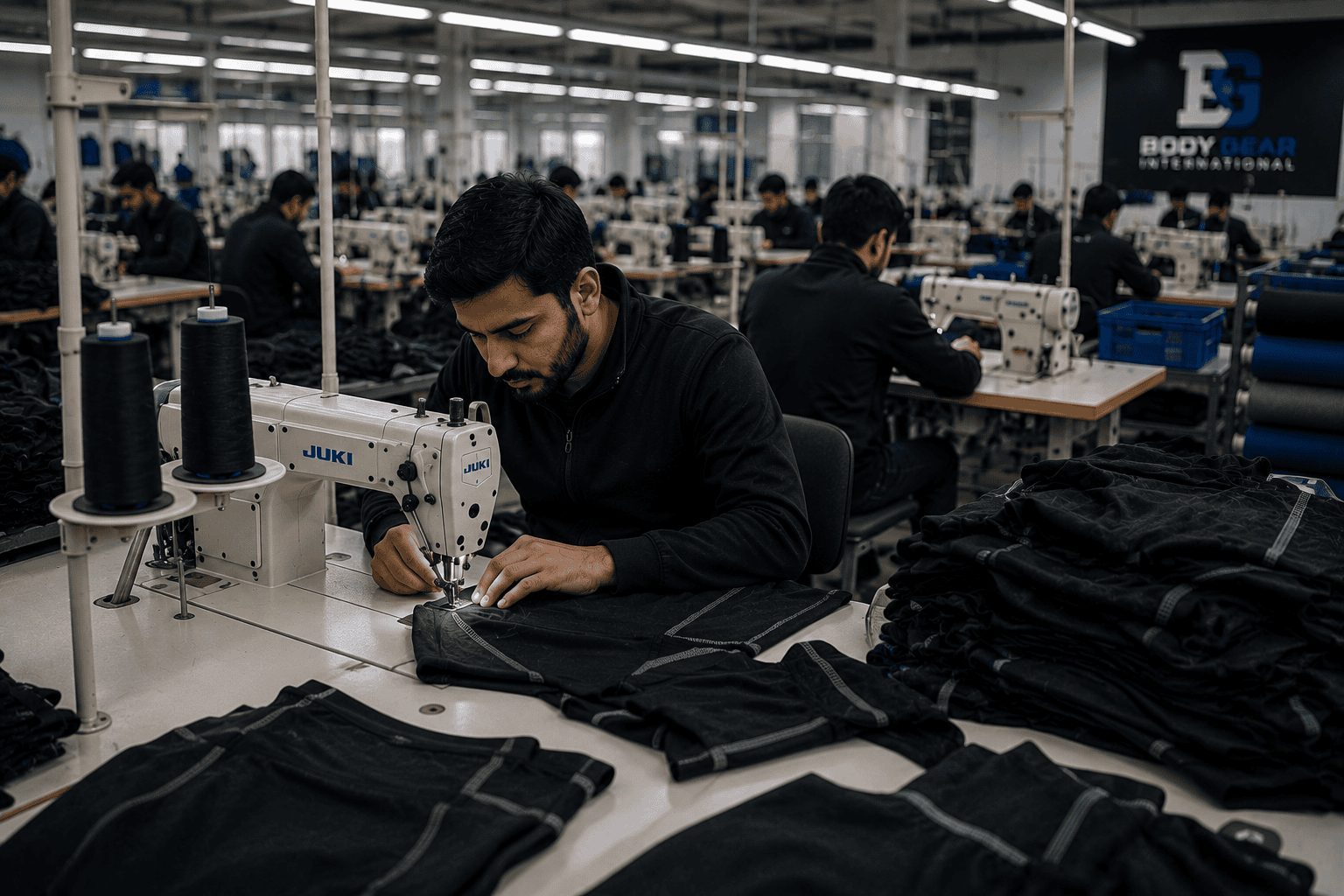
Launching a fitness apparel line today means competing with established brands that have spent years refining their sourcing. The fastest way to close that gap is working with a private label activewear manufacturer who already has the fabric libraries, pattern blocks, and production capacity in place. This guide walks through how private label activewear manufacturing works, what separates a reliable partner from a risky one, and the questions to ask before committing to a production run.
What Is Private Label Activewear Manufacturing?
Private label manufacturing means a private label activewear manufacturer produces activewear using existing pattern blocks and fabric options, then applies your brand’s labels, hang tags, and packaging. Unlike a fully custom cut-and-sew program, private label programs typically move faster and carry lower minimum order quantities, making them a practical entry point for new fitness brands and a useful complement for established ones testing new categories.
Private Label vs. Custom Cut-and-Sew: What’s the Difference?
The two approaches sit on a spectrum. Private label relies on a manufacturer’s existing patterns and fit blocks, with branding and minor style tweaks layered on top. Custom cut-and-sew starts from your own technical specs and pattern development, giving full control over fit and construction but requiring longer lead times, higher MOQs, and more design input from your side. Many brands start with private label to validate demand, then move specific styles into custom development once sales justify it.
Choosing the Right Fabric for Gym Wear and Activewear
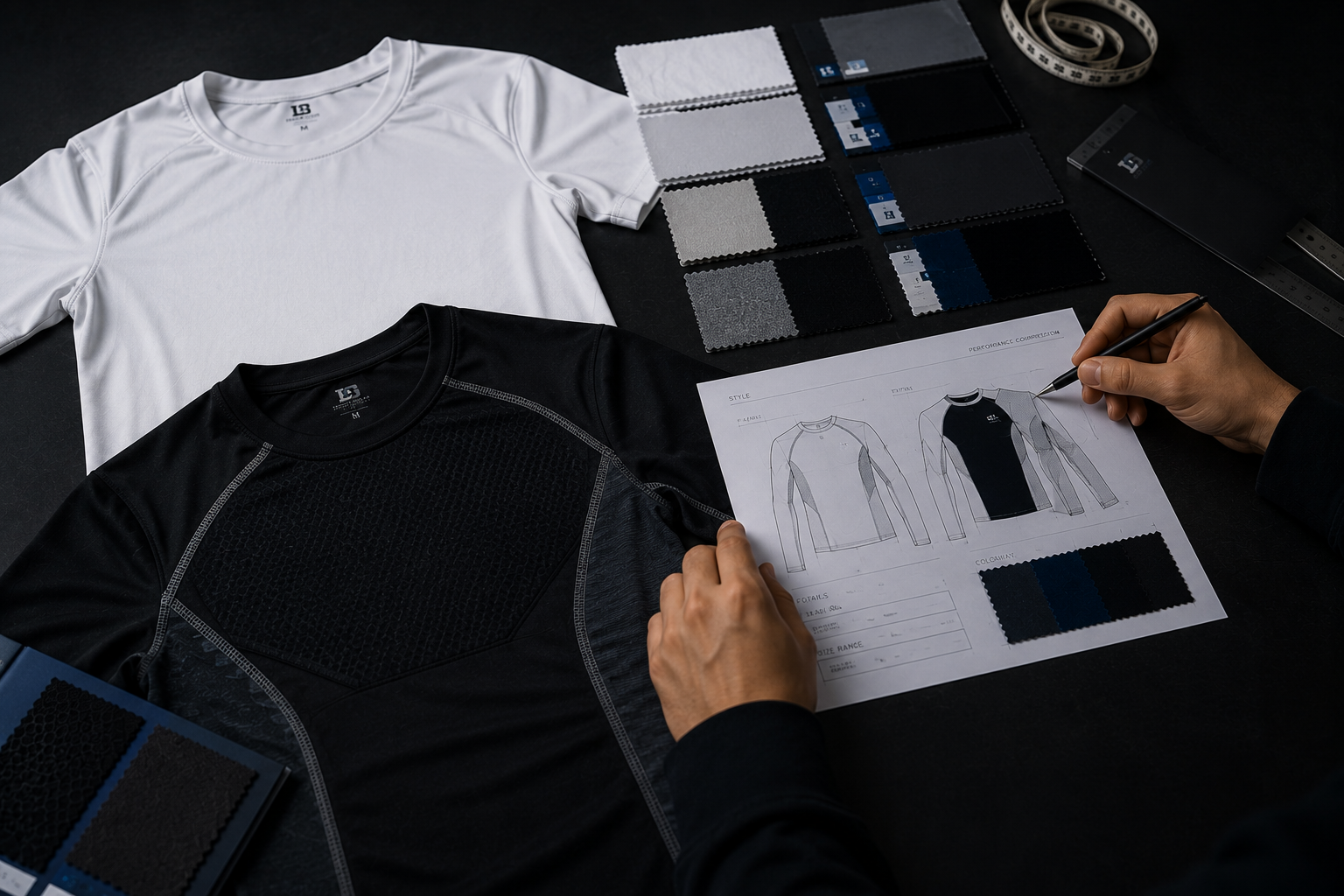
Fabric choice affects how a garment performs and how it’s priced. Common activewear fabrics include polyester-spandex blends for compression leggings, nylon-spandex for four-way stretch shorts, and moisture-wicking poly blends for training tops. Ask your manufacturer for fabric swatches with GSM (grams per square meter) listed, since GSM affects both feel and cost. Lighter fabrics around 180-220 GSM suit running and hot-weather training, while heavier fabrics around 240-280 GSM hold compression and shape better for leggings and squat-proof bottoms.
Key Technical Features Worth Specifying
Beyond fabric, a handful of construction details separate mid-tier activewear from premium product: flatlock or four-needle six-thread seams to reduce chafing, gusseted crotch panels for mobility, moisture-wicking and anti-odor finishes, and squat-proof opacity testing for leggings. Specify these details upfront in your tech pack or product brief so pricing quotes reflect the actual build you want.
MOQs, Pricing, and Lead Times
Private label MOQs commonly range from 50-100 pieces per style and colorway with an established private label activewear manufacturer compared to 300 or more pieces for fully custom cut-and-sew programs. Pricing depends on fabric, print or embellishment method, and order volume, and typically drops meaningfully once orders cross 300-500 units. Lead times for private label runs generally fall between 3-5 weeks for existing patterns, versus 6-10 weeks for custom development that includes pattern grading and fit sampling.
The Private Label Ordering Process, Step by Step
- Share your brief covering target price point, sizes, and rough design direction.
- Review fabric swatches and existing pattern options, then select a base style.
- Approve a pre-production sample, checking fit, stitching, and fabric hand-feel.
- Confirm branding placement, whether woven labels, heat transfers, or printed tags.
- Approve bulk production after sign-off on the final sample.
- Receive quality-control reports and shipping documentation ahead of delivery.
Quality Control and Sample Approval
Never skip the pre-production sample stage. A sample lets you check seam strength, colorfastness, and how the fabric behaves after a wash cycle, issues that are far cheaper to fix before a 500-unit run than after. Ask whether your private label activewear manufacturer performs in-line inspections during cutting and sewing, plus a final random inspection before packing, and request photos or a video call during production for larger orders.
Common Mistakes Fitness Brands Make When Sourcing
Even experienced brands run into avoidable problems when they don’t vet a private label activewear manufacturer carefully:
- Skipping wash-test samples, then discovering shrinkage or color bleed after delivery.
- Choosing the cheapest quote without confirming fabric GSM or seam type.
- Underestimating lead times around peak seasons, leaving no buffer before launch.
- Not clarifying labeling and packaging requirements until after production starts.
Sustainability Considerations in Activewear Sourcing
More fitness brands are asking about recycled polyester, OEKO-TEX certified fabrics, and reduced water-use dyeing processes. If sustainability is part of your brand story, ask manufacturers directly which certifications they hold and request documentation rather than relying on marketing claims alone.
Why Choose Body Gear International as Your Private Label Activewear Manufacturer
Body Gear International manufactures activewear and teamwear from Sialkot, Pakistan, working with fitness and sports brands on both private label and fully custom programs. Our in-house pattern library, fabric sourcing network, and quality-control process are built to support smaller private label orders as well as larger custom production runs as a brand scales.
Frequently Asked Questions
What’s a typical MOQ for a first private label order? Many first-time brands start around 50-100 units per style and colorway, though this varies by manufacturer and fabric.
How long does a private label sample take? Pre-production samples typically take 7-14 days depending on fabric availability and complexity.
Can I switch from private label to fully custom later? Yes, many brands begin with private label styles to validate demand, then move successful styles into custom pattern development.
Final Thoughts
Private label manufacturing gives fitness brands a practical way to launch or expand an activewear line without the lead times and investment a fully custom program requires. The brands that get the best results ask detailed fabric and construction questions upfront, insist on a pre-production sample, and build in a realistic timeline. If you’re evaluating private label activewear manufacturers for your next activewear collection, we’re happy to walk through fabric options and MOQs for your specific styles.
- Published in Sourcing Guides
Custom Sublimated Team Uniforms: The Complete Buyer’s Guide for Sports Clubs & Teamwear Brands (2026)
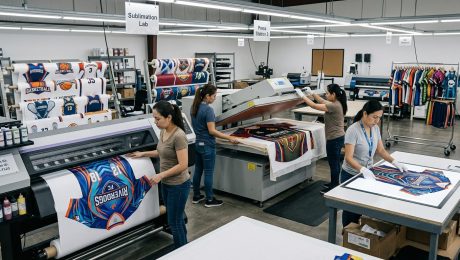
Ordering custom sublimated team uniforms is one of those decisions that looks simple until you are three quotes deep and realizing every manufacturer means something different by “full sublimation,” “team kit,” and “moisture-wicking.” Whether you run a sports club, a teamwear reseller, or a growing apparel brand, this guide walks through exactly what sublimated uniforms are, how they compare to screen printing and embroidery, what belongs in your artwork file, and the MOQs, pricing, and lead times you should expect before you commit an order.
What Are Sublimated Team Uniforms?
Sublimation is a printing process where the design is turned into a gas under heat and pressure and dyed directly into the fabric fibers rather than layered on top of them. The ink becomes part of the fabric, which is why a properly sublimated jersey does not crack, peel, or fade the way a printed transfer eventually does. For team uniforms, this matters more than it sounds: kits get washed constantly, stretched during play, and expected to look sharp across a full season.
Because the design is dyed rather than applied, sublimation also allows unlimited colors, all-over patterns, gradients, player names, and sponsor logos with no extra per-color cost. That is the core reason it has become the default for football, basketball, soccer, cricket, rugby, and esports kits worldwide.

Sublimation vs. Screen Printing vs. Embroidery: Which Should You Choose?
All three decoration methods have a place, but they solve different problems. Here is how they actually compare for teamwear.
- Sublimation — Best for full-color, all-over designs, player names and numbers, and lightweight performance jerseys. The print never sits on the surface, so it stays breathable and does not crack. Works only on light-colored polyester fabrics, which is its one real limitation.
- Screen printing — Cost-effective for simple, few-color logos on cotton or cotton-blend garments in high volume. But every color adds a screen and cost, and thick prints can crack over time and trap heat, which is why it is less ideal for performance kits.
- Embroidery — The premium, textured look for logos, crests, and polo shirts. Extremely durable and upscale, but not suitable for large designs or full-color artwork, and it adds weight and stiffness you do not want on a match jersey.
The short version: choose sublimation for on-field performance kits and all-over designs, embroidery for premium crests and staff polos, and screen printing for simple, budget cotton tees in bulk. Many teams combine methods, such as a sublimated jersey paired with an embroidered training jacket.
What to Include in Your Uniform Artwork File (Tech Pack)
The single biggest cause of delays and disappointing samples is a vague artwork brief. A manufacturer can only build what you give them. Before you request production, prepare the following:
- Vector artwork for logos and sponsor marks (AI, EPS, or PDF), not low-resolution JPGs pulled from a website.
- Exact color codes in Pantone (PMS) values so your club colors are reproduced consistently across every kit and every reorder.
- Panel layout and placement for the front, back, sleeves, collar, and shorts, including where names, numbers, and sponsors sit.
- A size breakdown covering youth and adult sizing, since team orders almost always mix both.
- Name and number lists if you want individual player personalization applied during production.
- Fabric and fit preference such as slim athletic fit versus relaxed, and whether you want a specific fabric weight (more on that below).
A good manufacturer turns this into a digital mockup for your sign-off before anything is cut. If they skip the mockup-approval step entirely, treat that as a warning sign.
Fabric and GSM: What Actually Affects a Uniform’s Feel and Performance
“Performance fabric” is a phrase that gets used to mean almost nothing. What actually matters is the fabric composition and the GSM (grams per square meter, which is the fabric’s weight and a rough proxy for its durability and feel).
- Interlock and micro-mesh polyester are the workhorses of sublimated jerseys because they hold color brilliantly and stay breathable.
- Moisture-wicking finishes pull sweat to the surface for faster evaporation, worth specifying explicitly rather than assuming any polyester qualifies.
- Four-way stretch blends (polyester-spandex) matter for compression base layers and fitted kits where range of motion is critical.
- GSM range for most match jerseys sits between roughly 140 and 180 GSM: light enough to breathe, heavy enough to last a season. Training wear and outerwear run heavier.
Ask your manufacturer to state the exact fabric composition and GSM for your kit. Vague answers here usually mean vague quality control everywhere else too.
MOQs, Pricing, and Lead Times: What to Expect
Costs and minimums vary with design complexity, fabric choice, and personalization, but here is a realistic benchmark for ordering custom sublimated uniforms overseas:
- MOQs are far more flexible than they used to be. A full team kit run of 10 to 15 pieces is workable with many manufacturers, and a single pre-production sample is standard practice before bulk.
- Sampling generally takes 1 to 2 weeks, and sample fees are often credited back against your first bulk order (confirm this in writing).
- Bulk production typically runs 2 to 4 weeks for standard team orders, longer for large multi-team or highly personalized runs.
- Shipping via DHL, FedEx, UPS, or DPD usually adds a few days to a week with tracking.
Always get sample cost, per-unit price at your target quantity, and total lead time in writing before you commit. A manufacturer that answers these clearly is a manufacturer that has done this many times before. This upfront clarity is what separates a smooth custom sublimated team uniforms order from a stressful one.
The Ordering Process, Step by Step
A well-run custom uniform order moves through six clear stages:
- Inquiry and consultation. You share your sport, design direction, quantity, and personalization needs. Ask about MOQ, sample cost, and lead time upfront.
- Design and artwork approval. The design team turns your brief into a digital mockup with colorways and logo placement for your sign-off.
- Material selection. Fabric and GSM are chosen based on your sport and performance requirements.
- Sample production. A physical sample is produced so you can check fit, color accuracy, and print quality before committing to the full run.
- Bulk production and quality inspection. Approved samples move into cutting, sublimation, and stitching, with in-line checks on print alignment, stitching, and sizing.
- Packaging and shipping. Finished kits are inspected against the sample, packed, and shipped worldwide with tracking.
Red Flags to Watch For When Ordering Custom Uniforms
- No willingness to produce a paid pre-production sample before the bulk run.
- Vague answers about fabric composition, GSM, or whether printing is done in-house.
- No digital mockup or approval step before cutting.
- Pressure to pay 100% upfront with no milestone-based payment structure.
- Prices that look too good to be true, which usually means thinner fabric or outsourced printing you cannot inspect.
Why Body Gear International for Custom Sublimated Team Uniforms
We have been manufacturing and exporting custom sportswear from Sialkot, Pakistan since 2005, and sublimated team uniforms are one of our core specialties. We produce full kits across football, basketball, soccer, cricket, rugby, and more, with sublimation, cutting, stitching, and quality checks all handled in-house rather than outsourced. That means real control over color accuracy, fabric weight, and finish at every stage. We work with flexible minimums for clubs and growing teamwear brands, provide a sample before bulk, and ship to 80+ countries through DHL, UPS, FedEx, and DPD. Clubs, schools, and teamwear brands around the world trust us to produce their custom sublimated team uniforms season after season.
If you are planning your next team kit, get in touch for a sample quote, or browse our full product catalog to see what we produce. You can also read our related guide on choosing a custom sportswear manufacturer in Pakistan. Whether it’s your first custom sublimated team uniforms order or your tenth, our team can walk you through fabric, pricing, and timelines.
Frequently Asked Questions
What is the difference between sublimation and screen printing on uniforms?
Sublimation dyes the design directly into the fabric fibers, so it does not crack, peel, or fade and allows unlimited colors and all-over patterns. Screen printing layers ink on top of the fabric, which is cheaper for simple few-color logos but can crack over time and is less breathable, making sublimation the better choice for custom sublimated team uniforms and other performance kits.
What is the minimum order quantity for custom team uniforms?
MOQs vary by manufacturer, but many now accept full team runs of around 10 to 15 pieces, with a single pre-production sample available before bulk. Flexible minimums are common for clubs and new teamwear brands.
How long does it take to produce custom sublimated uniforms?
Sampling generally takes one to two weeks, and bulk production usually runs two to four weeks depending on order size and personalization. Shipping by international courier adds a few days to a week.
What fabric is best for sublimated sports jerseys?
Light-colored polyester fabrics such as interlock and micro-mesh are ideal because sublimation only bonds to polyester and these fabrics hold color well while staying breathable. Most match jerseys sit in the 140 to 180 GSM range, with moisture-wicking finishes and four-way stretch specified where needed.
Can I add player names and numbers to each uniform?
Yes. Because sublimation prints unlimited colors and text at no extra per-color cost, individual player names, numbers, and sponsor logos can be built into each kit during production. Provide a name and number list with your artwork file.
Do sublimated uniforms fade after washing?
No. Because the design is dyed into the fibers rather than sitting on the surface, a properly sublimated uniform keeps its color through repeated washing and a full season of play, which is the main reason it has become the standard for teamwear.
- Published in Sourcing Guides
Custom Sportswear Manufacturer in Pakistan: The Complete Sourcing Guide for Activewear & Fitness Brands (2026)
Choosing a custom sportswear manufacturer Pakistan brands can rely on is one of the most important decisions an activewear label makes, and it often decides whether you scale smoothly or stall on quality and lead times. Sialkot has quietly become one of the strongest sourcing hubs for custom activewear, and this guide covers exactly why, along with MOQs, pricing, and what to check before you place an order.
If you have spent any time trying to source custom activewear, you have probably noticed the same three or four countries showing up over and over: China, Vietnam, the US, maybe Bangladesh. Pakistan barely gets a mention, which is strange, because Sialkot has been quietly manufacturing sportswear for the biggest names in world sport for decades. If you have ever held a professional football, you have probably held something made there.
That gap between reputation and visibility is actually good news if you are a brand owner. It means less noise, less competition for quotes, and manufacturers who are hungry to prove themselves to smaller and mid-size brands, not just billion-dollar accounts. This guide walks through why Sialkot has become a serious option when you are choosing a custom sportswear manufacturer in Pakistan, what the sourcing process actually looks like, and what to check before you commit an order.
Why Sialkot, Pakistan Is a Real Sportswear Manufacturing Hub
Sialkot is not a new player trying to catch up to China. It is one of the oldest sporting goods manufacturing regions in the world, originally built around leather goods and match balls before expanding into full sportswear and activewear production. A few things make it genuinely competitive today:
- Decades of technical know-how. Factories here have been producing performance apparel, from compression gear and team uniforms to protective wear, long enough that pattern-making and stitching quality are inherited skills, not something a factory picked up in the last five years.
- Lower production costs without the compliance gaps. Labor and overhead costs sit below Western manufacturing hubs, but many Sialkot-based exporters already work under international quality and certification frameworks because their client base has always included European and North American sports brands.
- Export infrastructure that is already built. Manufacturers here regularly ship to 80+ countries using standard carriers like DHL, UPS, FedEx, and DPD, so international shipping is not a bottleneck the way it can be with smaller factories elsewhere.
- Broader product range in one place. A lot of Sialkot manufacturers can produce compression wear, team sports uniforms, MMA and combat sportswear, and technical outerwear under one roof, which is useful if your brand plans to expand beyond one category.
If cost, technical capability, and product range all matter to your sourcing decision, Pakistan deserves a spot on your shortlist next to the usual suspects.
Custom Manufacturing vs. Private Label vs. Wholesale: Which Do You Actually Need?
Before you request a single quote, get clear on which model fits your brand, because this determines everything from MOQ to timeline to what you can legally call “your” product.
- Wholesale means buying existing designs in bulk with no changes. It is the fastest and cheapest way to get inventory, but you are selling the same product as everyone else who buys from that factory.
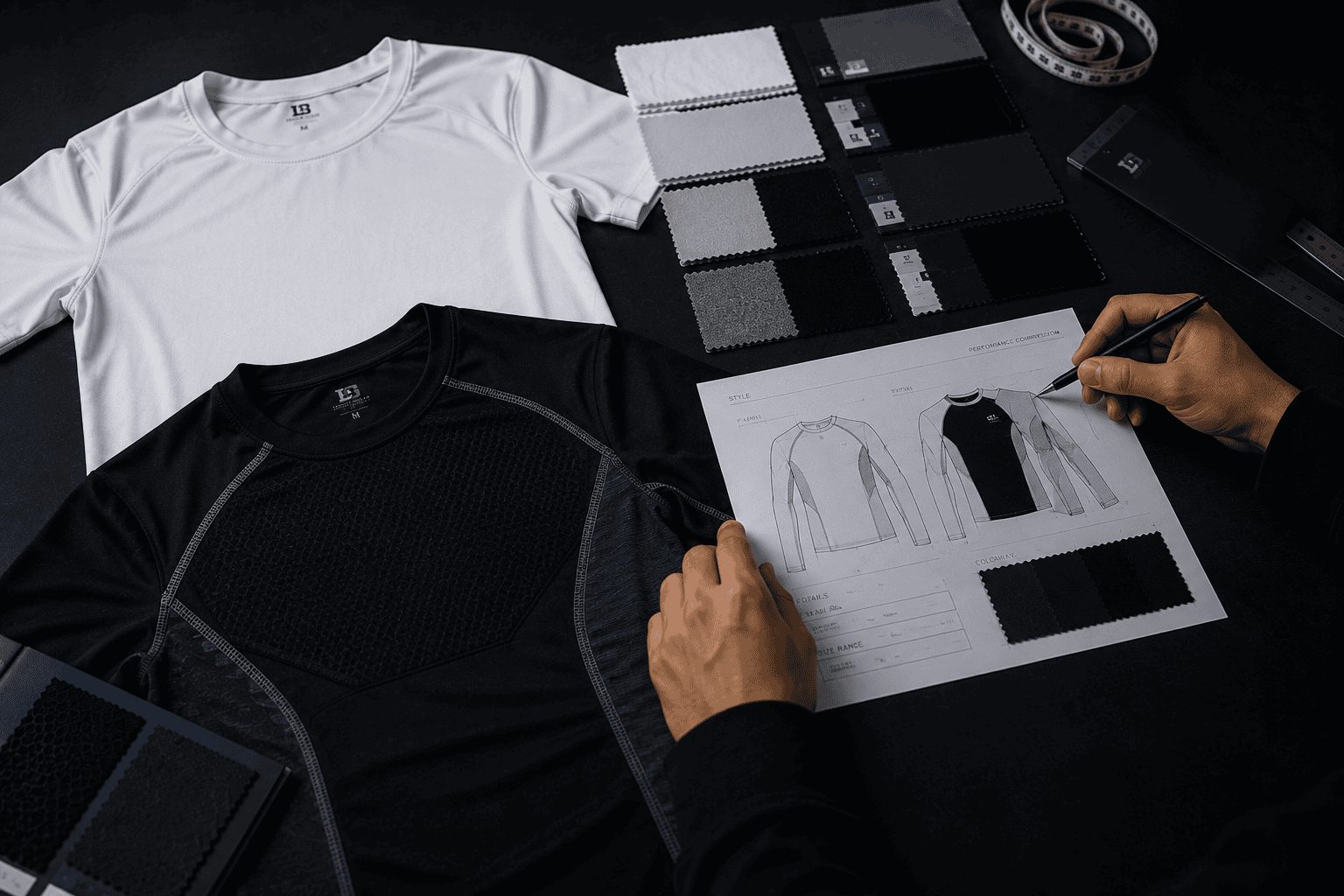
- Private label means the factory’s existing designs get your logo, tags, and packaging. You get brand identity without the cost of developing a garment from scratch, a common starting point for new fitness apparel brands.
- Custom (OEM/ODM) manufacturing means you bring your own design, fit specs, and fabric preferences (or work with the factory’s design team to develop them), and the garment is built around your specification from the ground up. This is where a factory’s technical depth actually matters, because you are relying on them to interpret a tech pack accurately, not just relabel a template.
Most brands do not stay in one lane forever. A common path is private label to validate demand cheaply, then custom manufacturing once you know which styles sell and want to differentiate on fit, fabric, or performance features competitors cannot easily copy.
What a Serious Sportswear Manufacturer Should Offer
Whether you are vetting a factory in Sialkot, China, or anywhere else, the checklist does not change much. Look for:
- Sample-first policy. Any manufacturer unwilling to produce a sample before bulk production is a red flag, full stop.
- Fabric transparency. They should be able to name specific fabric compositions (moisture-wicking polyester blends, four-way stretch nylon-spandex, compression-grade fabrics) rather than vague terms like “high quality material.”
- Decoration capability on-site. Sublimation printing, embroidery, heat transfer, and screen printing should ideally happen in-house rather than being outsourced to a third party you have no visibility into.
- Documented quality control. Ask what inspection stops exist between cutting and packaging, such as stitching checks, measurement checks, and colorfastness testing.
- Realistic MOQs for your stage. A factory quoting 1,000-unit minimums to a brand that needs 100 units to test the market is not the right fit yet, regardless of how good their samples look.
- Category depth. If you might expand into team uniforms, kids’ activewear, or protective sportswear later, a manufacturer that already produces those categories saves you from re-vetting a second supplier down the line.
The Production Process, Step by Step
A well-run custom sportswear order typically moves through six stages:
- Inquiry and consultation. You share design direction, fabric preference, product type, and expected order volume. This is also where you should ask about MOQ, sample cost, and lead times upfront.
- Design and artwork approval. The manufacturer’s design team turns your brief into a digital mockup (colorways, logo placement, panel layout) for your sign-off before anything gets cut.
- Material selection. Fabric and trims get chosen based on the garment’s performance requirements: compression fit, moisture-wicking, four-way stretch, breathability, or weatherproofing depending on category.
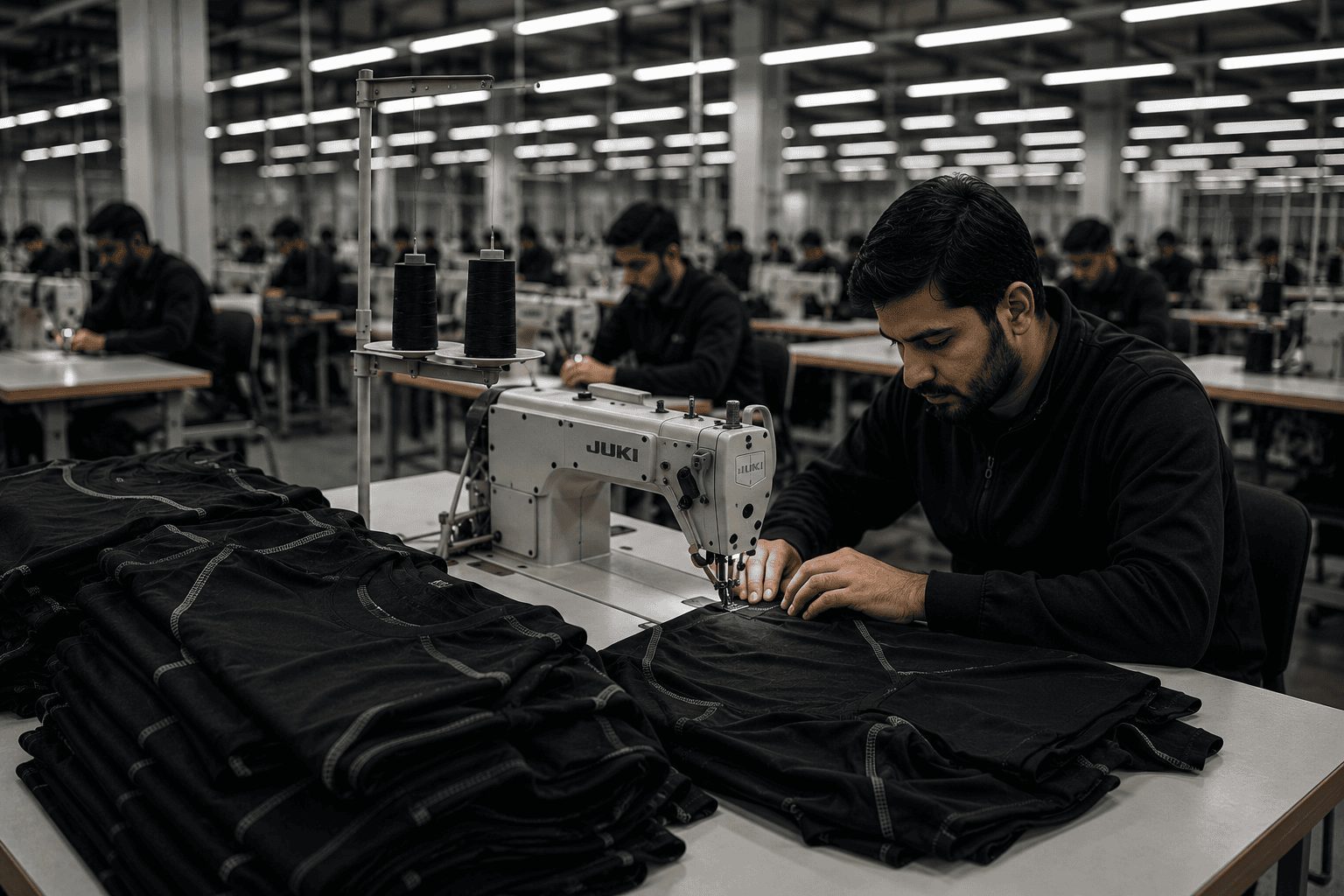
- Production and stitching. Approved samples move into cutting and sewing. This is the stage where experienced factories separate themselves, because flawless seam finishing on compression wear and technical fabrics is genuinely harder to execute than on basic cotton tees.
- Quality inspection. Finished units get checked against the approved sample before packaging: stitching, sizing, print or embroidery accuracy, and overall finish.
- Shipping. Orders go out via international couriers with tracking, and a good manufacturer stays reachable for feedback after delivery rather than disappearing once payment clears.
If a factory cannot clearly explain each of these steps when you ask, that is usually a sign the process is not as controlled as their sales pitch suggests.
Fabric and Technology: What Actually Affects Performance
Not all “performance fabric” claims mean the same thing. A few terms worth knowing before you brief a manufacturer:
- Sublimation printing dyes the design directly into the fabric fibers rather than sitting on top of it, which means no cracking or fading. This is why it is the standard for team uniforms and all-over print designs.
- Compression fabric blends (typically nylon or polyester with spandex) need the right stretch ratio for the garment’s purpose. A compression short and a compression full-length legging are not built from identical fabric weights.
- Moisture-wicking finishes (common in our base layers) pull sweat away from skin to the fabric surface for faster evaporation, worth specifying explicitly rather than assuming any polyester blend qualifies.
- Rash guard fabric for MMA and combat sportswear needs a tighter, more durable knit than standard activewear since it is built for direct-contact wear.
Ask your manufacturer to name the exact fabric composition and GSM (grams per square meter) for your product. Vague answers here usually mean vague quality control everywhere else too.
MOQs, Pricing, and Timelines: What to Expect
Pricing and minimums vary by product complexity, fabric choice, and decoration method, but here is a general benchmark for working with a custom sportswear manufacturer in Pakistan or elsewhere overseas:
- Sampling typically takes 1 to 3 weeks depending on complexity.
- Production for a confirmed order usually runs 3 to 6 weeks, longer for large or highly technical orders (full team uniform kits, for example).
- MOQs are increasingly negotiable outside the big-factory-big-brand model. Many Sialkot exporters will work with smaller first orders from new brands specifically because they are trying to build long-term relationships, not just fill container quotas.
Always get sample cost and production lead time in writing before you commit, and clarify whether sample fees are credited back against your first bulk order, a normal industry practice that not every factory volunteers.
Red Flags to Watch For When Sourcing Overseas
- No willingness to produce a paid sample before bulk production
- Vague answers about fabric composition or GSM
- No documented QC process they can describe step by step
- Pressure to pay the full amount upfront with no milestone-based payment structure
- Unwillingness to share previous work, even under NDA or with client names redacted
Why Body Gear International Is a Trusted Custom Sportswear Manufacturer in Pakistan
As a custom sportswear manufacturer Pakistan buyers return to, we have been producing and exporting sportswear, activewear, and fitness apparel from Sialkot since 2005, and we work across a wider category range than most competitors: compression wear, MMA rash guards, team sports uniforms (football, basketball, soccer, cricket, rugby, and more), kids’ fitness wear, and technical equestrian apparel, all produced in-house with in-line quality checks at every stage. We currently export to 80+ countries and ship through DHL, UPS, FedEx, and DPD. This track record is why brands keep choosing us as their custom sportswear manufacturer Pakistan sourcing partner.
If you are evaluating manufacturers for your next production run, get in touch for a sample quote, or browse our full product catalog to see what we produce. We’re ready to help if you’re comparing your next custom sportswear manufacturer Pakistan options.
Frequently Asked Questions
Is Pakistan a reliable country to source custom sportswear from?
Yes. Sialkot in particular has manufactured sporting goods and sportswear for international markets for decades, with established export infrastructure and experience working with brands across Europe, North America, and Australia.
What is the difference between private label and custom (OEM) sportswear manufacturing?
Private label uses the factory’s existing designs with your branding applied. Custom or OEM manufacturing builds the garment around your own design and fabric specifications from scratch, giving you more control but usually requiring a longer development timeline.
What MOQ should I expect from a Pakistan-based sportswear manufacturer?
It varies by factory and product complexity, but many exporters offer more flexible minimums to new brands than large-volume factories elsewhere, since building repeat relationships matters more to them than a single big order.
How long does custom sportswear production usually take?
Sampling generally takes one to three weeks, with bulk production following in three to six weeks depending on order size and garment complexity.
Can one manufacturer handle multiple product categories, like uniforms and compression wear?
Some can. Factories with broader in-house capability, covering compression, team uniforms, protective wear, and outerwear under one operation, are useful if you plan to expand your product line without re-vetting a new supplier each time.
- Published in Sourcing Guides
