Ordering custom sublimated team uniforms is one of those decisions that looks simple until you are three quotes deep and realizing every manufacturer means something different by “full sublimation,” “team kit,” and “moisture-wicking.” Whether you run a sports club, a teamwear reseller, or a growing apparel brand, this guide walks through exactly what sublimated uniforms are, how they compare to screen printing and embroidery, what belongs in your artwork file, and the MOQs, pricing, and lead times you should expect before you commit an order.
What Are Sublimated Team Uniforms?
Sublimation is a printing process where the design is turned into a gas under heat and pressure and dyed directly into the fabric fibers rather than layered on top of them. The ink becomes part of the fabric, which is why a properly sublimated jersey does not crack, peel, or fade the way a printed transfer eventually does. For team uniforms, this matters more than it sounds: kits get washed constantly, stretched during play, and expected to look sharp across a full season.
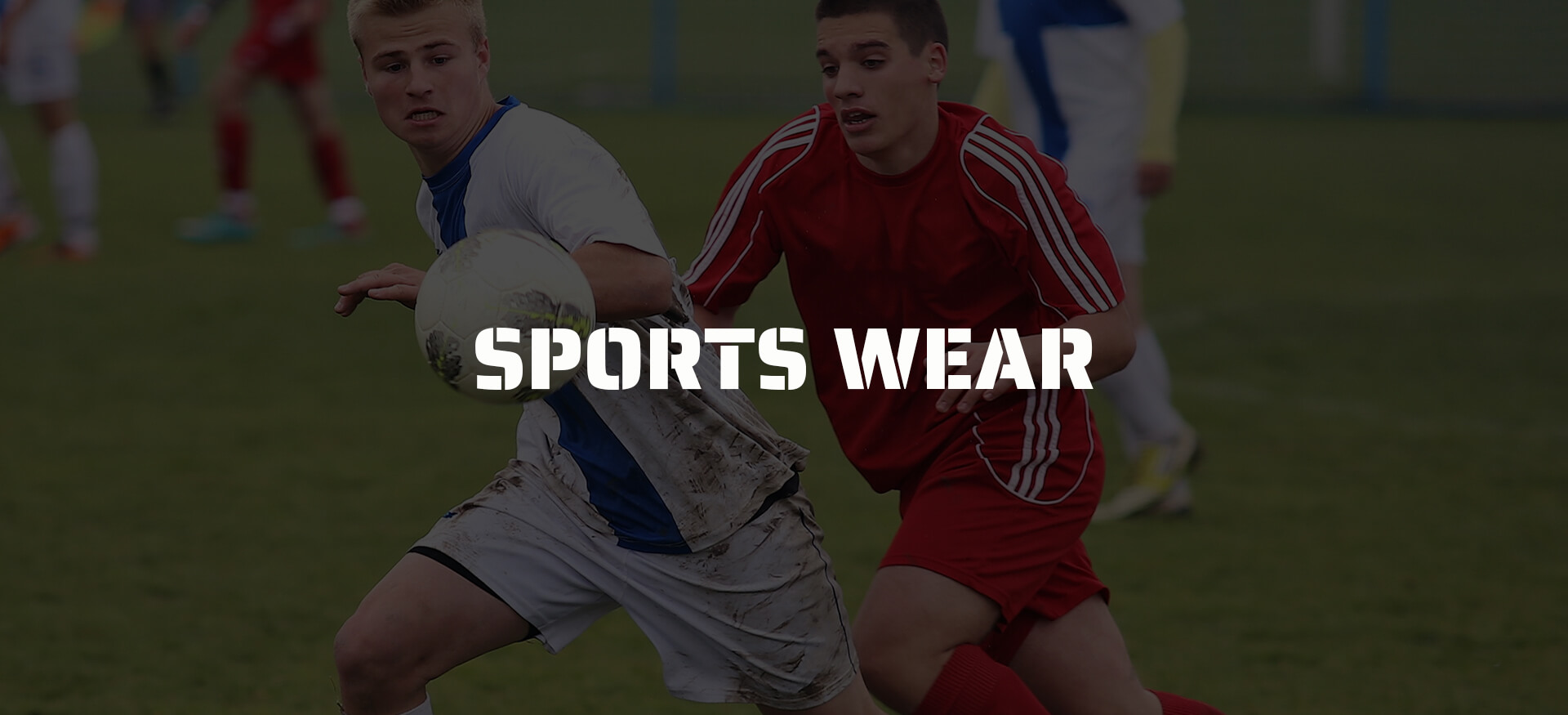
Because the design is dyed rather than applied, sublimation also allows unlimited colors, all-over patterns, gradients, player names, and sponsor logos with no extra per-color cost. That is the core reason it has become the default for football, basketball, soccer, cricket, rugby, and esports kits worldwide.

Sublimation vs. Screen Printing vs. Embroidery: Which Should You Choose?
All three decoration methods have a place, but they solve different problems. Here is how they actually compare for teamwear.
- Sublimation — Best for full-color, all-over designs, player names and numbers, and lightweight performance jerseys. The print never sits on the surface, so it stays breathable and does not crack. Works only on light-colored polyester fabrics, which is its one real limitation.
- Screen printing — Cost-effective for simple, few-color logos on cotton or cotton-blend garments in high volume. But every color adds a screen and cost, and thick prints can crack over time and trap heat, which is why it is less ideal for performance kits.
- Embroidery — The premium, textured look for logos, crests, and polo shirts. Extremely durable and upscale, but not suitable for large designs or full-color artwork, and it adds weight and stiffness you do not want on a match jersey.
The short version: choose sublimation for on-field performance kits and all-over designs, embroidery for premium crests and staff polos, and screen printing for simple, budget cotton tees in bulk. Many teams combine methods, such as a sublimated jersey paired with an embroidered training jacket.
What to Include in Your Uniform Artwork File (Tech Pack)
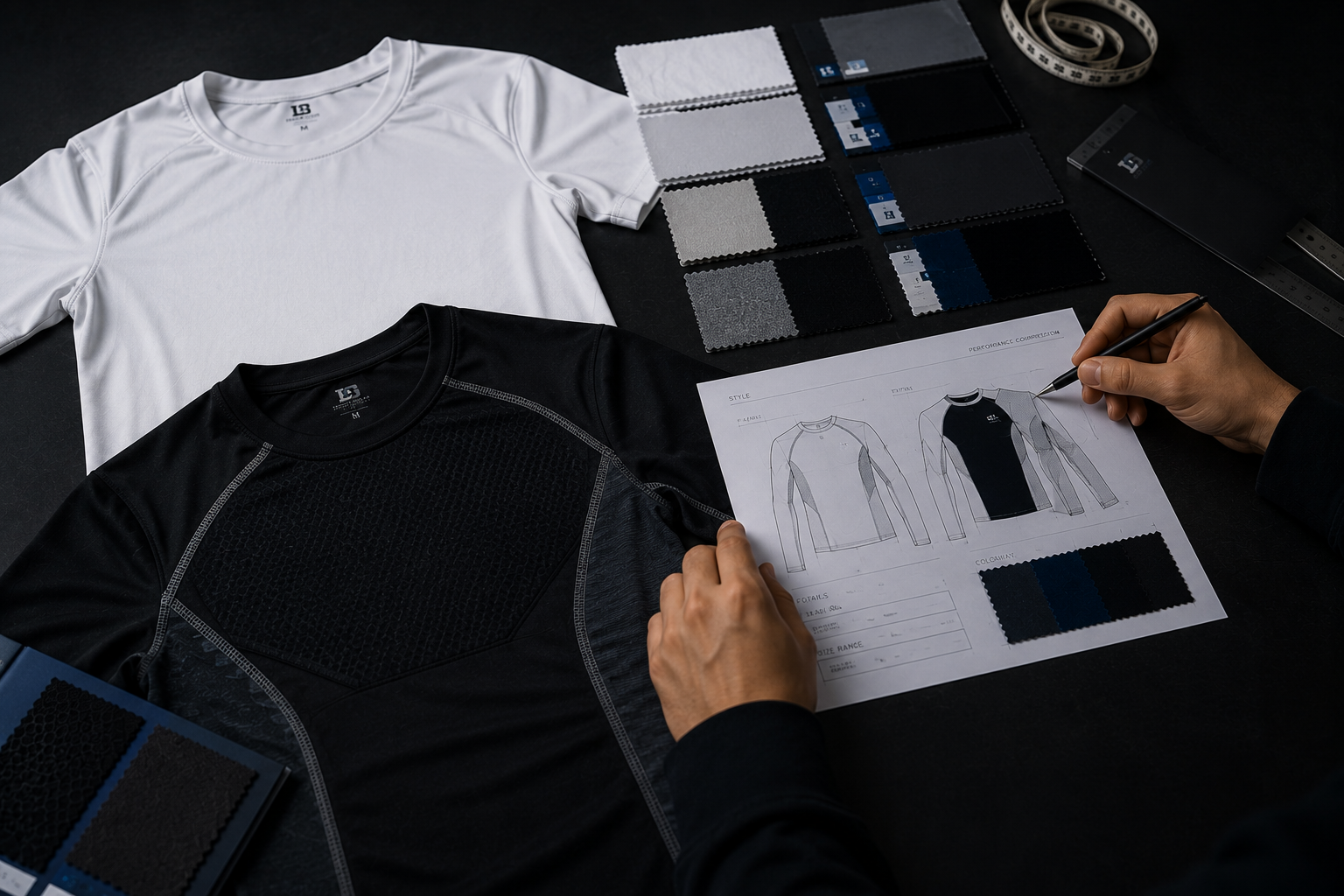
The single biggest cause of delays and disappointing samples is a vague artwork brief. A manufacturer can only build what you give them. Before you request production, prepare the following:
- Vector artwork for logos and sponsor marks (AI, EPS, or PDF), not low-resolution JPGs pulled from a website.
- Exact color codes in Pantone (PMS) values so your club colors are reproduced consistently across every kit and every reorder.
- Panel layout and placement for the front, back, sleeves, collar, and shorts, including where names, numbers, and sponsors sit.
- A size breakdown covering youth and adult sizing, since team orders almost always mix both.
- Name and number lists if you want individual player personalization applied during production.
- Fabric and fit preference such as slim athletic fit versus relaxed, and whether you want a specific fabric weight (more on that below).
A good manufacturer turns this into a digital mockup for your sign-off before anything is cut. If they skip the mockup-approval step entirely, treat that as a warning sign.
Fabric and GSM: What Actually Affects a Uniform’s Feel and Performance
“Performance fabric” is a phrase that gets used to mean almost nothing. What actually matters is the fabric composition and the GSM (grams per square meter, which is the fabric’s weight and a rough proxy for its durability and feel).
- Interlock and micro-mesh polyester are the workhorses of sublimated jerseys because they hold color brilliantly and stay breathable.
- Moisture-wicking finishes pull sweat to the surface for faster evaporation, worth specifying explicitly rather than assuming any polyester qualifies.
- Four-way stretch blends (polyester-spandex) matter for compression base layers and fitted kits where range of motion is critical.
- GSM range for most match jerseys sits between roughly 140 and 180 GSM: light enough to breathe, heavy enough to last a season. Training wear and outerwear run heavier.
Ask your manufacturer to state the exact fabric composition and GSM for your kit. Vague answers here usually mean vague quality control everywhere else too.
MOQs, Pricing, and Lead Times: What to Expect
Costs and minimums vary with design complexity, fabric choice, and personalization, but here is a realistic benchmark for ordering custom sublimated uniforms overseas:
- MOQs are far more flexible than they used to be. A full team kit run of 10 to 15 pieces is workable with many manufacturers, and a single pre-production sample is standard practice before bulk.
- Sampling generally takes 1 to 2 weeks, and sample fees are often credited back against your first bulk order (confirm this in writing).
- Bulk production typically runs 2 to 4 weeks for standard team orders, longer for large multi-team or highly personalized runs.
- Shipping via DHL, FedEx, UPS, or DPD usually adds a few days to a week with tracking.
Always get sample cost, per-unit price at your target quantity, and total lead time in writing before you commit. A manufacturer that answers these clearly is a manufacturer that has done this many times before.
The Ordering Process, Step by Step
A well-run custom uniform order moves through six clear stages:
- Inquiry and consultation. You share your sport, design direction, quantity, and personalization needs. Ask about MOQ, sample cost, and lead time upfront.
- Design and artwork approval. The design team turns your brief into a digital mockup with colorways and logo placement for your sign-off.
- Material selection. Fabric and GSM are chosen based on your sport and performance requirements.
- Sample production. A physical sample is produced so you can check fit, color accuracy, and print quality before committing to the full run.
- Bulk production and quality inspection. Approved samples move into cutting, sublimation, and stitching, with in-line checks on print alignment, stitching, and sizing.
- Packaging and shipping. Finished kits are inspected against the sample, packed, and shipped worldwide with tracking.
Red Flags to Watch For When Ordering Custom Uniforms
- No willingness to produce a paid pre-production sample before the bulk run.
- Vague answers about fabric composition, GSM, or whether printing is done in-house.
- No digital mockup or approval step before cutting.
- Pressure to pay 100% upfront with no milestone-based payment structure.
- Prices that look too good to be true, which usually means thinner fabric or outsourced printing you cannot inspect.
Why Body Gear International for Custom Sublimated Team Uniforms
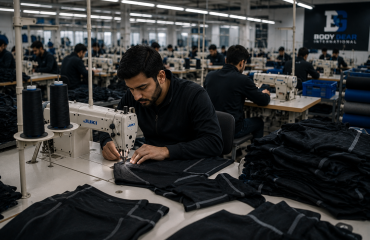
We have been manufacturing and exporting custom sportswear from Sialkot, Pakistan since 2005, and sublimated team uniforms are one of our core specialties. We produce full kits across football, basketball, soccer, cricket, rugby, and more, with sublimation, cutting, stitching, and quality checks all handled in-house rather than outsourced. That means real control over color accuracy, fabric weight, and finish at every stage. We work with flexible minimums for clubs and growing teamwear brands, provide a sample before bulk, and ship to 80+ countries through DHL, UPS, FedEx, and DPD.
If you are planning your next team kit, get in touch for a sample quote, or browse our full product catalog to see what we produce. You can also read our related guide on choosing a custom sportswear manufacturer in Pakistan.
Frequently Asked Questions
What is the difference between sublimation and screen printing on uniforms?
Sublimation dyes the design directly into the fabric fibers, so it does not crack, peel, or fade and allows unlimited colors and all-over patterns. Screen printing layers ink on top of the fabric, which is cheaper for simple few-color logos but can crack over time and is less breathable, making sublimation the better choice for performance team kits.
What is the minimum order quantity for custom team uniforms?
MOQs vary by manufacturer, but many now accept full team runs of around 10 to 15 pieces, with a single pre-production sample available before bulk. Flexible minimums are common for clubs and new teamwear brands.
How long does it take to produce custom sublimated uniforms?
Sampling generally takes one to two weeks, and bulk production usually runs two to four weeks depending on order size and personalization. Shipping by international courier adds a few days to a week.
What fabric is best for sublimated sports jerseys?
Light-colored polyester fabrics such as interlock and micro-mesh are ideal because sublimation only bonds to polyester and these fabrics hold color well while staying breathable. Most match jerseys sit in the 140 to 180 GSM range, with moisture-wicking finishes and four-way stretch specified where needed.
Can I add player names and numbers to each uniform?
Yes. Because sublimation prints unlimited colors and text at no extra per-color cost, individual player names, numbers, and sponsor logos can be built into each kit during production. Provide a name and number list with your artwork file.
Do sublimated uniforms fade after washing?
No. Because the design is dyed into the fibers rather than sitting on the surface, a properly sublimated uniform keeps its color through repeated washing and a full season of play, which is the main reason it has become the standard for teamwear.